Pull up two Playa Vista listings side by side. Same square footage, same year built, similar finishes, comparable HOA amenities. The list prices sit within a few thousand dollars of each other. Then you get to the tax estimate line and one of them is carrying a few thousand extra dollars a year that the other doesn't have at all.
It isn't a pricing error. It's a line that runs through the middle of the neighborhood, and it has nothing to do with the unit itself.
The line is a financing decision, not a floor plan
Playa Vista was built in phases, and the two phases paid for their own infrastructure in completely different ways. Phase I financed its roads, parks, stormwater systems, utility infrastructure, and its fire station through bonds issued under a Community Facilities District, a financing tool created by California's Mello-Roos Community Facilities Act of 1982. The law is named for its authors, state senator Henry Mello and assemblyman Mike Roos, and it exists because of a gap Proposition 13 created four years earlier. Prop 13 capped general property taxes at 1 percent of assessed value and limited annual increases to 2 percent, which protected homeowners from runaway tax bills but also cut off the traditional way California cities funded new infrastructure. Mello-Roos was the workaround: form a district, sell bonds against future tax revenue, and let the homeowners inside that specific district repay the bonds through a special tax that shows up separately from the regular property tax line.
Los Angeles formalized this for Playa Vista as Community Facilities District No. 4, and the city's own administrative code creates a dedicated Special Tax Collection Fund for it, specifically labeled Phase 1. That label matters more than almost anything else on a Playa Vista listing sheet, because Phase II was developed later and its infrastructure costs were built into the original builder pricing instead of financed through a bond district. The practical result is that Phase II parcels generally carry no Mello-Roos special tax at all, while Phase I parcels are still paying down a bond that has decades left on it.
Neither phase is the better deal by default. A Phase I unit with an established Mello-Roos schedule is a known, bounded cost. A Phase II unit with no CFD line simply built that infrastructure cost into the purchase price up front instead of spreading it across future tax bills. But if you're comparing a Phase I unit to a Phase II unit purely on list price and HOA dues, you're comparing two different cost structures as if they were the same one.
What the actual bill looks like right now
The special tax is parcel specific, not a flat neighborhood rate, and it does not track square footage in a simple straight line. The most recent full fiscal year on file, 2025-26, shows individual Phase I parcels carrying annual special tax amounts as specific as $1,365.69 and $2,454.09. Two units a few doors apart can land on different tiers of the levy schedule depending on unit size and product type as defined when the district was formed.
Cost line | What it covers | Where it shows up |
|---|---|---|
Regular property tax | Base 1 percent rate plus voter-approved add-ons | LA County secured tax bill |
Mello-Roos special tax (Phase I only) | Roads, parks, stormwater, utilities, fire station bond repayment | Separate line on the same secured tax bill, listed under the CFD |
Building or unit HOA | Building-specific maintenance and reserves | Monthly HOA statement |
PVPAL master association fee | Shared amenities and services across the broader community | Monthly master HOA statement, commonly cited in the low hundreds of dollars |
Community Enhancement Fee | One-time charge tied to community programs and open space upkeep | Due at resale, typically around three-quarters of one percent of the sale price |
That last line deserves its own mention because it only appears once, at the moment of sale, and it has historically been treated as a seller-paid cost in Playa Vista, though who actually pays it has shifted with market conditions and is very much a live negotiating point in any given transaction.
Zoom out and Playa Vista's overall tax picture already runs above the county norm even before you isolate Phase I. A property tax analysis by Ownwell puts Playa Vista's median effective property tax rate at 1.45 percent, well above the California state median of 1.21 percent and the national median under 1 percent. That gap alone reflects the neighborhood's mix of newer construction and CFD-financed parcels. Layer a Phase I special tax on top of it and the difference between a Phase I and Phase II unit at the same sale price gets real fast.
How to find out which side of the line you're on
You cannot tell Phase I from Phase II by looking at a building. Some Phase I and Phase II product sits close together, and marketing materials rarely spell out the distinction because it isn't a selling point either way, just a structural fact. Here's how to check before you write an offer or set a list price:
- Pull the Assessor's Parcel Number from the listing sheet, the preliminary title report, or the seller's disclosures.
- Look up the current secured property tax bill for that parcel through the Los Angeles County property tax portal and scan for a separate line labeled Community Facilities District, Special Tax, or Direct Assessment.
- If a special tax line appears, ask the seller's agent or title company for the CFD's formation documents or Preliminary Official Statement, which spell out the levy formula, the maximum authorized tax, the escalation rate, and how many years remain on the bond.
- Confirm the current PVPAL master HOA fee and any building-level HOA fee separately, since these are billed apart from the county tax bill and don't appear on it.
- Ask directly whether the Community Enhancement Fee has historically been paid by the seller in that specific transaction context, since this varies with how competitive the market is at the time.
None of this shows up on a standard portal tax estimate, which is exactly why it catches buyers comparing units by price per square foot alone.
What this actually means for a buyer or seller
For a buyer, the Phase I versus Phase II question changes the real monthly cost of two homes that look identical on paper. A unit with a Mello-Roos line of a few thousand dollars a year is effectively a few hundred dollars a month added to the true cost of ownership, and lenders count that special tax the same way they count your regular property tax when calculating debt-to-income. That can shift how much home you actually qualify for, even when the sale price on both units matches.
For a seller with a Phase I unit, the special tax is not something to bury in the disclosures and hope a buyer's agent skips over. Buyers who do their homework will find it, and the ones who don't will find it at underwriting, which is a worse time for everyone involved. Presenting the number clearly, alongside what it has actually funded, the parks, the fire station, the roads that make the neighborhood function, turns a line item that could read as a red flag into a straightforward fact about how this specific corner of the Westside was built.
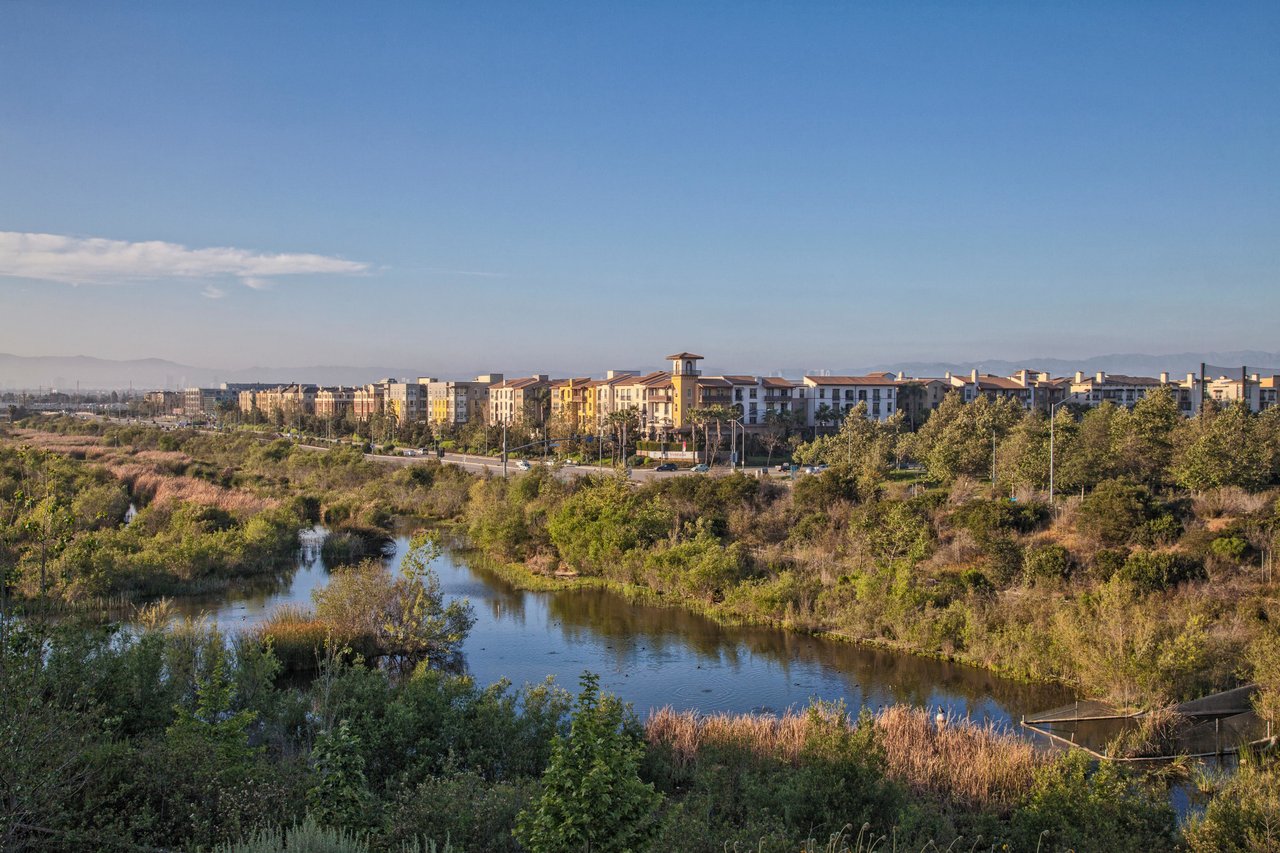
Playa Vista's broader appeal, the 70 percent of the original design set aside as parks and open space, the CenterPointe Club, the restored freshwater wetlands along the Ballona corridor, exists in part because the Phase I infrastructure bond paid for pieces of it. The tax line is the receipt for the neighborhood, not a penalty for buying into it.
A few questions worth asking directly
Does the Mello-Roos tax ever go away? It ends when the underlying bonds are paid off, which the formation documents specify in years, not as an open-ended obligation. Confirm the remaining term for the specific parcel rather than assuming a standard timeline, since Community Facilities Districts can authorize additional bonds that extend the special tax beyond the original schedule.
Is the special tax deductible? It depends on the nature of the specific levy and current tax law, and the deductibility question is separate from whether the charge shows up on the county bill. This is a question for a tax professional reviewing the actual CFD documents, not something to assume either way.
Does this apply to single-family homes in Playa Vista too, or only condos? The Phase I versus Phase II split applies by parcel and district, not by property type, so detached homes within Phase I boundaries can carry the same special tax structure as condos and townhomes in the same district.
If you're weighing a Playa Vista purchase against another Westside option, or pricing a Playa Vista listing and want the Phase I or Phase II distinction handled clearly for buyers from the first showing, The Kohl Team can walk through the specific parcel with you. Request Your Complimentary Home Valuation and we'll start with the number that actually matters.