Venice homes tell a story, from sunlit porches to steel-framed windows and rooftop decks. If you love character or crave clean-lined modern living, you can find it here. In this guide, you will learn how key architectural styles shape floor plans, outdoor space, materials, and even permitting. You will also see what those choices mean for value and day-to-day living. Let’s dive in.
What shapes Venice homes
Venice started as Abbot Kinney’s “Venice of America,” a network of canals and pedestrian paths that set the tone for small cottages and intimate streets. The Venice Canals are listed as a historic district, which helps explain the area’s distinct scale and water-facing lots. You can explore the district’s background in the National Register listing for the Venice Canal Historic District.
Today, planning policy and preservation priorities continue to guide what gets built or remodeled. The city’s draft Venice Community Plan highlights walk streets, canals, and neighborhood character as design drivers, and it catalogs historic resources that may influence exterior changes. For a deeper look at how local rules shape design, review the City of Los Angeles draft Venice Policy Document.
Venice home styles you will see
Bungalows and early cottages
- What you notice: Low gabled roofs, wide porches, exposed wood details, and cozy proportions. Many originals were compact, then opened up over time with sensitive remodels. Local coverage of historic Venice cottages shows strong buyer affection for this character-rich style. See examples in the Los Angeles Times’ look at Venice bungalows.
- Floor plan feel: Traditionally 1 to 2 bedrooms with compartmentalized rooms. Many updated homes rework walls to improve flow and add light, sometimes with creative studio or rooftop spaces.
- Outdoor space: Small front gardens and porches on walk streets, narrow side yards, and intimate back patios. Rooftop decks appear where yards are tight.
- Materials and upkeep: Original wood framing, wood siding, hardwood floors, and plaster. The best renovations modernize systems while keeping built-ins, windows, and trim.
- Appeal and tradeoffs: You get authenticity and human scale, often near walkable amenities. Expect smaller square footage and potential historic review if a property is designated or in a historic district.
Contemporary modern homes
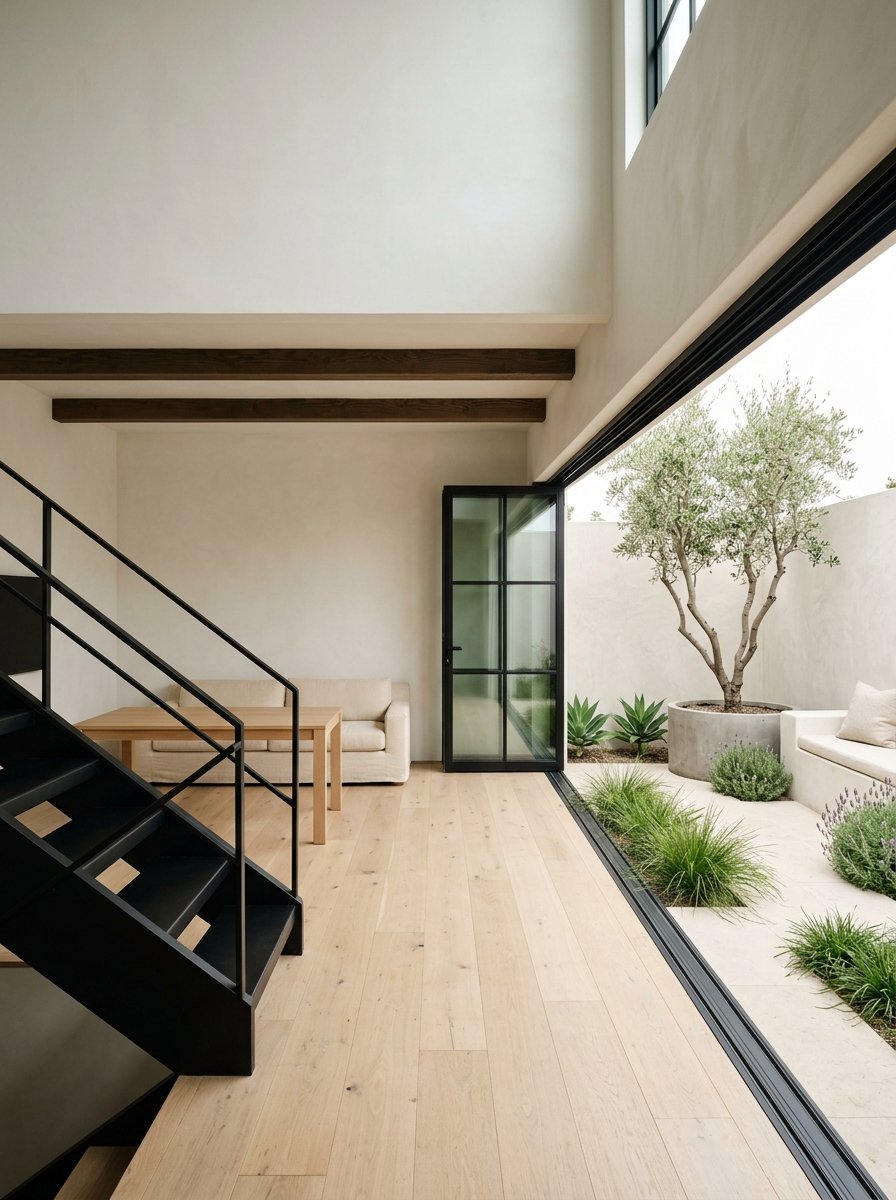
- What you notice: Clean volumes, large glass walls, slide-away doors, and minimal ornament. Interiors are open and bright, with island kitchens and indoor-outdoor flow. Press on architect-designed Venice homes shows strong interest in this look, such as the work featured by MADS/Patrick Tighe.
- Floor plan feel: Often 2 to 3 levels. Garages and guest spaces sit at grade, main living moves up to capture light or views, and primary suites or roof decks top it off.
- Outdoor space: Layered terraces, courtyards, and roof decks extend living areas. Glass and pocket doors create a seamless feel between inside and out.
- Materials and upkeep: Stucco, board-formed concrete, fiber-cement panels, metal accents, and high-performance windows are common. Durable finishes and coastal-rated systems are a must near the beach.
- Appeal and tradeoffs: Great for design-forward living, flexible work zones, and entertaining. The look is distinctive, so it may appeal more to modern-leaning buyers.
Live/work lofts and artist spaces
- What you notice: Tall ceilings, open ground-floor studios, and residential spaces above. You see these near commercial corridors and in adaptive-reuse sites.
- Floor plan feel: Work below, sleep above, often with mezzanines to use vertical volume. Projects like the Electric ArtBlock show how Venice embraced creative live/work formats; explore that history through Integral Studios’ project notes.
- Outdoor space: Limited private yards, with small courtyards or shared roof decks. Proximity to Abbot Kinney or neighborhood amenities often fills the gap.
- Zoning notes: Live/work has specific local standards that address use, employees, signage, and parking. Always verify permitted use and any recorded conditions.
- Appeal and tradeoffs: Perfect for creatives or owner-operators who want workspace at home. The buyer pool is focused but passionate.
Other recurring types
- Mid-century and postwar homes: Single-story or split-level plans with simple forms and indoor-outdoor potential.
- Spanish and Mediterranean revival: Stucco cottages with arches and courtyards that adapt well to today’s alfresco lifestyle.
These broader patterns appear in city planning overviews of Venice’s housing stock. You can spot them summarized in the draft Venice Policy Document.
Site and rules that shape plans
- Narrow lots, vertical living: Walk streets and canals often mean slender parcels. Many homes stack living spaces or add roof decks to unlock outdoor area when yards are small.
- Historic review: Some homes are Historic-Cultural Monuments or part of identified historic districts. Exterior changes or demolitions may need review, so check status early.
- Venice LDR standards: The Venice Local Development Regulations draft sets expectations for height, parking, compatibility buffers, rooftop use, and live/work standards. Review current provisions in the Venice LDR draft before planning major additions.
- ADUs: Los Angeles supports Accessory Dwelling Units in many residential zones. ADUs are a common way to add living area or income, but coastal and historic contexts can affect approvals. Start with the city’s ADU program guidance.
- Coastal and flood awareness: Low-lying areas near the canals or lagoon warrant attention to drainage and flood considerations. The Venice Community Plan discusses coastal infrastructure and long-term strategies.
Coastal materials that last
Salt air and wind work hard on metals, finishes, and sealants. Smart material choices protect your investment and keep curb appeal high.
- Metals and fasteners: Use corrosion-resistant hardware, such as 316 stainless in exposed areas. Avoid mixing dissimilar metals without isolation.
- Siding and cladding: Choose fiber-cement, well-detailed stucco, and cementitious or concrete finishes that hold up to salt and sun.
- Windows and doors: Pick coastal-rated frames and glazing. Plan on rinsing hardware and maintaining seals on a regular schedule.
- Decking and rails: Consider capped composite decking with stainless fasteners, and powder-coated aluminum or stainless railings.
- Systems: Elevate and protect mechanical equipment where feasible, and specify corrosion-resistant packages for HVAC and pool gear.
For technical checklists on coastal detailing, see FEMA’s Home Builder’s Guide to Coastal Construction (FEMA P-499). These practices can extend repaint cycles, reduce corrosion, and keep a home show-ready near the beach.
Style, appeal, and market signals
- Bungalows: Buyers often respond to authenticity and porch-to-living flow. Many articles point to strong emotional appeal and careful restorations in Venice, as noted by the Los Angeles Times. The tradeoff is smaller footprints and more complex upgrades.
- Contemporary new builds: Open plans, natural light, and terraces draw design-focused buyers. Architect features that are well executed tend to command attention, as seen in Venice projects profiled by MADS/Patrick Tighe.
- Live/work lofts: Niche but strong demand among creatives and small professional practices. Confirm permitted use, parking, and any recorded conditions to protect resale.
- ADUs: Permitted ADUs often increase marketability by adding flexible space for income or multigenerational living. Always verify site-specific constraints first.
Across styles, buyers value open circulation, outdoor living, energy performance, and updated kitchens and baths. In Venice, indoor-outdoor flow, low-maintenance coastal materials, and clever storage for surf and bike gear help homes stand out.
Quick prep checklist
Use this to plan a purchase, renovation, or sale.
- Verify parcel details: Confirm zoning, any Venice LDR overlays, and historic status through City Planning resources.
- Review flood and coastal context: Check whether your lot sits in a low-lying zone referenced in the Venice Community Plan and plan drainage accordingly.
- Confirm permits: Pull LADBS records for additions, garage conversions, rooftop decks, and any ADU permits.
- Inspect materials: Note cladding type, window systems, deck hardware, visible corrosion, and roof condition. Plan coastal-appropriate upgrades where needed.
- Position for the right buyer: Highlight what your style offers, from bungalow charm and walk-street living to modern light and terraces or a true live/work setup.
Ready to buy or sell in Venice with design-smart guidance and hands-on service? Reach out to The Kohl Team for local expertise and a curated plan tailored to your goals.
FAQs
Are Venice bungalows protected from demolition?
- Some are, but not all. Protections are parcel specific, so check City Planning records and SurveyLA for historic status before planning exterior changes.
Can I add a rooftop deck on a canal or walk-street lot?
- Often possible, but rules vary by block and zone. Expect review of height, privacy, and safety details. Consult the current Venice LDR standards early in design.
Are live/work units legal for a small studio or shop?
- Many are, under specific live/work rules that limit employees, signage, and parking. Verify the recorded use rights and any conditions tied to the property.
How much extra maintenance does a beach-side home need?
- Coastal exposure accelerates corrosion and finish wear. Plan regular rinsing of hardware, timely repainting, and corrosion-resistant components guided by FEMA coastal best practices.
Will an ADU make my Venice home easier to sell?
- A permitted ADU is a plus for many buyers since it adds flexible living or income options, but approvals can be site specific. Start with the city’s ADU guidance and confirm feasibility.